
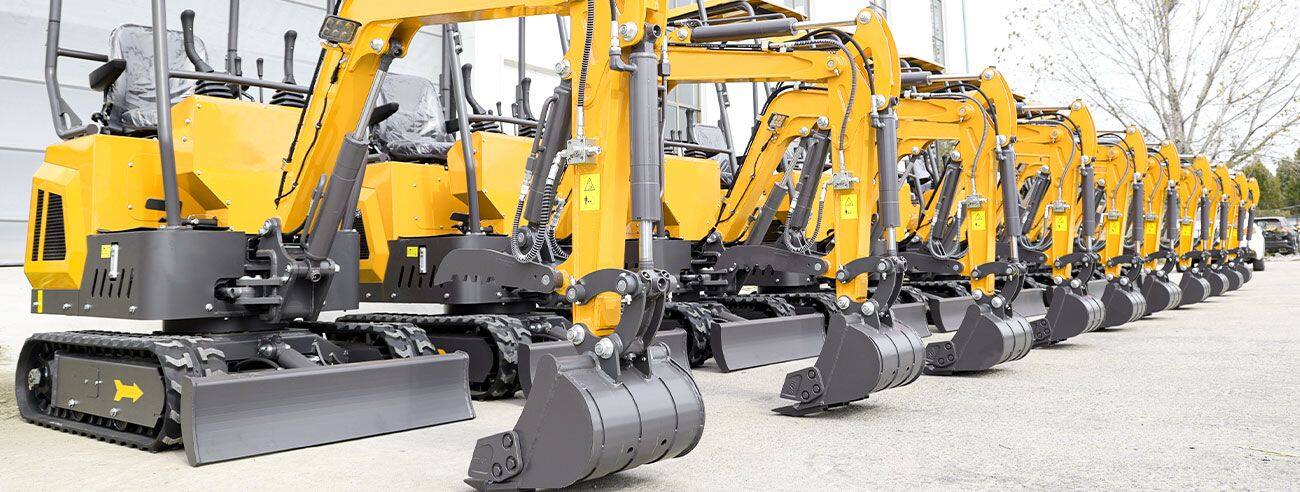
When executing critical construction projects, every minute counts. You need equipment that is reliable, versatile, and ready to tackle the next task. This is where compact equipment attachments come into play: they transform your machines into powerful, multi-functional workhorses.
This guide explores every aspect of compact equipment attachments—from selection and routine maintenance to performance optimization and safety—helping you unlock the full versatility of the compact machinery in your fleet.
Why attachments are important for compact equipment
Compact excavators feature a small footprint and a tight turning radius, enabling them to operate in confined spaces such as indoor areas, narrow passageways, orchards, and landscaped grounds. When paired with versatile attachments—particularly a quick-change coupler—operators can swap tools in minutes without even leaving the cab, maximizing the machine's adaptability in tight quarters.
Select the appropriate attachment.
Before selecting attachments for a compact excavator or a compact track loader, carefully examine your typical job sites and the primary tasks you perform.
If equipped only with a standard bucket, a compact excavator is limited to basic digging and backfilling tasks. However, by swapping in different attachments, it can instantly transform into a variety of specialized machines:
- Hydraulic Breaker: Transforms into a demolition tool for breaking up concrete pavement, building walls, or hard rock.
- Auger: Transforms into a drilling machine for tasks such as digging post holes for fences, planting trees, or setting utility poles.
- Hydraulic Thumb/Grapple: Transforms into a material handler for grasping irregularly shaped logs, stones, or debris.
- Plate Compactor: Transforms into a compaction tool for compacting soil after backfilling.
- Brush Cutter/Mulcher: Transforms into landscaping maintenance equipment for clearing weeds and brush from overgrown areas.
- Narrow Bucket (Trenching Bucket): Specifically designed for excavating trenches for cables or water pipes, minimizing unnecessary earthwork.
Tilting Bucket / Grading Bucket: Features adjustable angles, making it ideal for precision tasks such as slope trimming, ditch cleaning, and ground leveling, thereby reducing the need for manual touch-up work.
Efficiently troubleshoot accessory issues to ensure smooth equipment operation.
Attachments are likely to require maintenance during their service life. The key is to address issues promptly to prevent further damage and extend their lifespan.
Watch for Early Warning Signs of Failure
Remain vigilant if the attachment exhibits any of the following conditions:
Visual abnormalities: Visible structural damage, deformation, or misalignment.
Frequent unusual noises: Emission of abnormal sounds or noises not previously present.
Erratic operation: Sticking, shuddering, or jerky movement of the hydraulic attachment.
Fluid leakage: Any form of leakage—whether a high-pressure spray or a minor drip—indicates a fault. For example, if a hydraulic thumb begins to leak oil, the equipment must be shut down immediately for inspection and repair.
Recommendation: In the event of a complex malfunction, please contact your local authorized dealer promptly. Professional technicians, equipped with expert repair skills and genuine OEM parts, can quickly resolve issues and restore your equipment to optimal operating condition.
Following the maintenance steps outlined above can significantly extend the service life of attachments for mini-excavators and compact track loaders; this not only enhances operational safety and construction efficiency but also generates greater economic returns for you.